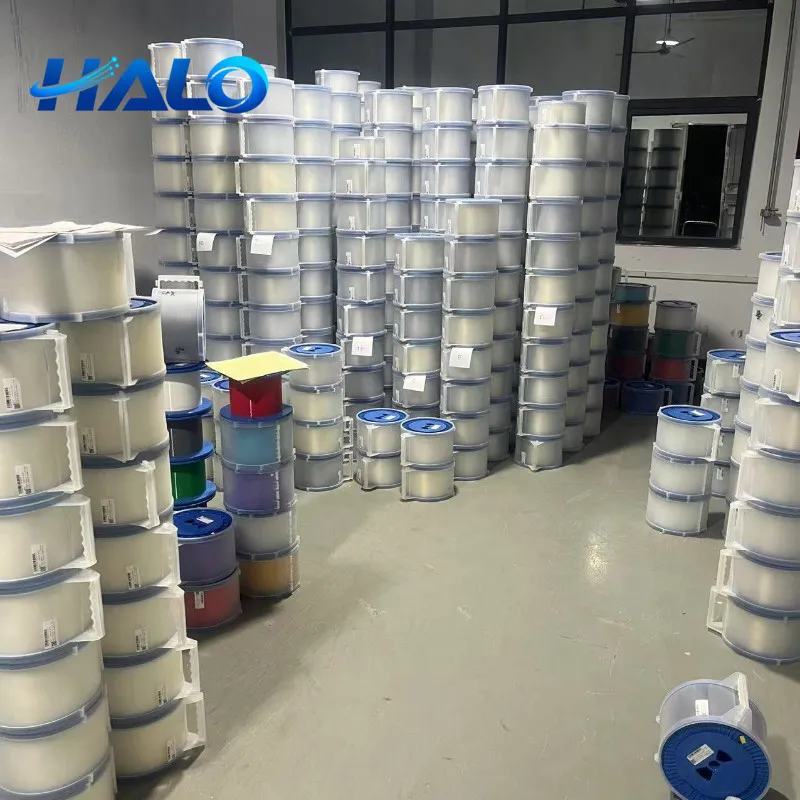
G.652.D Plus Low Loss Single-mode Fibre

Hangzhou Halo Fiber Optic Co.,Ltd
G652D, G652D fiber, optical fiber, bare fiber optic
G.652.D Plus Low Loss Single-mode Fibre
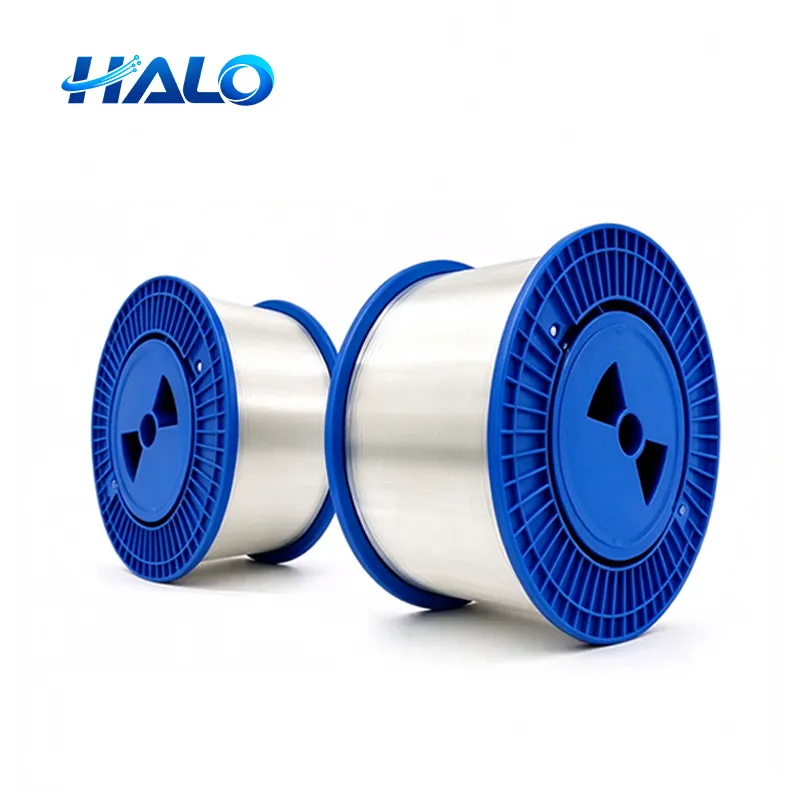
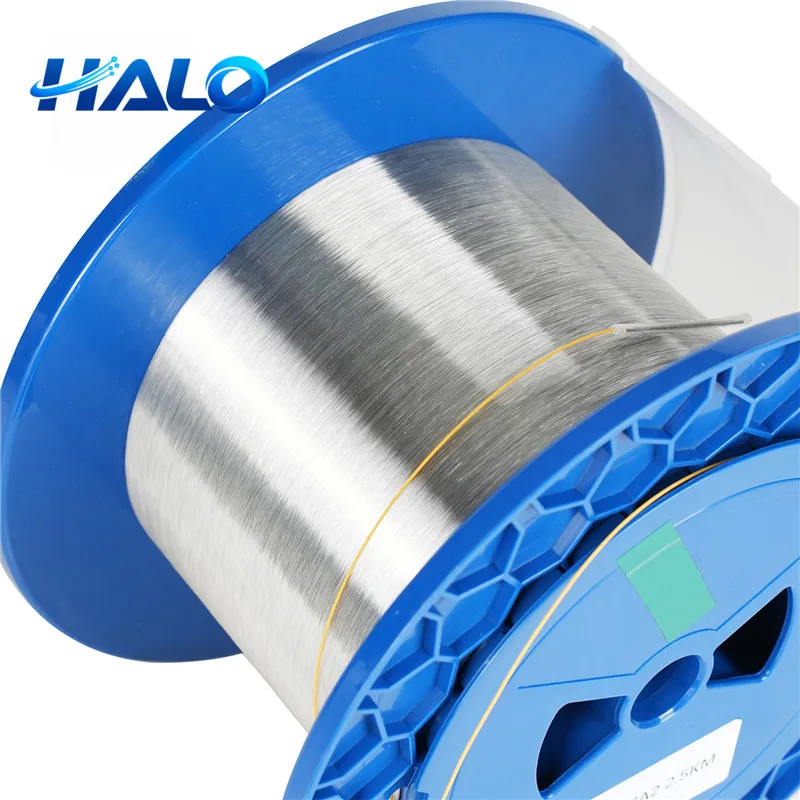
Optical Bare Fiber Factory Sm G652D G657A2 Roll 50km
Factory Direct Transparent Invisible Fiber Spool G652D G657A1 G657A2 50km 10km Single Mode Bare Fiber
G652D G657A1 G657A2 G655 Colored Optical Fiber 25.2km 50.4km 60km on Spool
G652D G657A1 G657A2 50.4km/Roll 60km/Roll

G.652.D Plus Low Loss Single-mode Fibre

Halo's Plus Low Loss Single-mode Fibre is designed specially for optical transmission systems which operates over the entire wavelength window from 1260 nm to 1625 nm. By suppressing the water peak that occurs near 1383 nm in conventional single mode fibre due to hydroxyl (OH-) ions absorption, The Plus Fibre is able to open E-band (1360 to 1460nm ) for operation, and consequently provides 100 nm more usable wavelengths. our Plus Fibre is effectively optimized for much lower attenuation level across the entire wavelength window from 1260 nm up to 1625 nm.
  • Model

    Single-Mode Optical Fiber
  • Fiber type

    G.652.D
  • Length

    50.4km/reel; 60.4km/reel; OEM
  • Packing

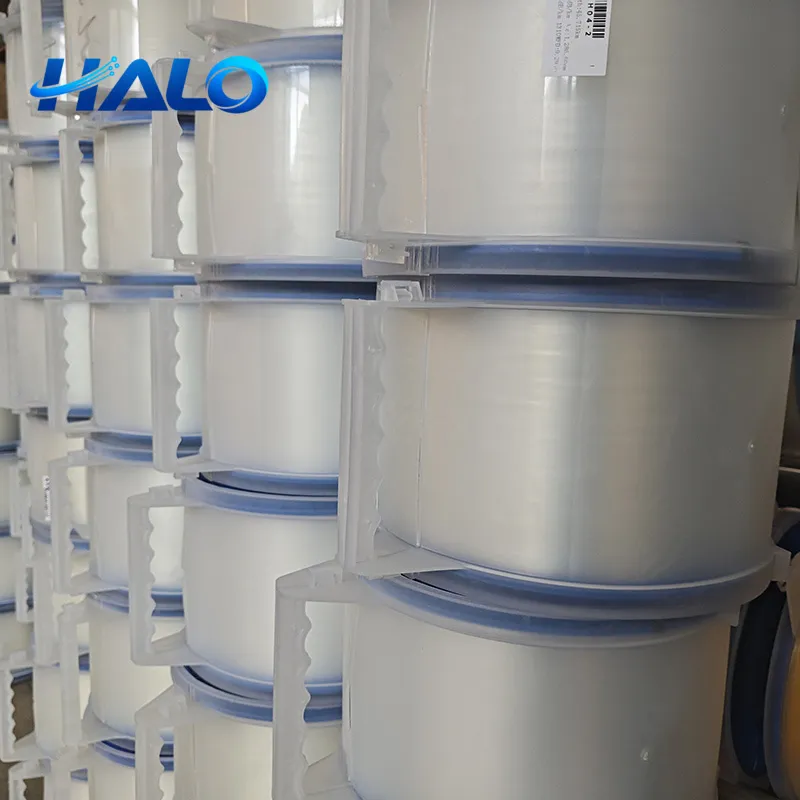
    plastic reel/shell
  • Certificates

    UL, ETL, CE,CPR, RoHS
  • Delivery time

    Normally 15 working days
  • Port of Loading

    SHANGHAI
  • Term of payment

    30%TT as deposit,70%Balance before shipping.

Product Performance

1. Wider wavelength range for high-speed networks.
2. Accurate Mold Field Diameter (MFD) characteristics ensure low splice losses and good compatibility.

Application Scenarios

1. 100G and B100G high-speed long-haul long-span backbones.
2. High-bandwidth metro networks and access networks.

Characteristics

• Designed for operation over the full optical spectrum from 1260-1625 nm, and hence the transmission capacity is increased
• Much lower attenuation over the full optical spectrum from 1260 nm to 1625 nm, which meet the demand of extended long distance transmission
• Outstanding optical performance supporting high-speed transmission technologies such as DWDM and CWDM
• Being compatible with existing 1310 nm equipment
• Good protection and excellent strip force stability
• Accurate geometrical parameters that insure low splicing loss and high splicing efficiency

Product Specification

Characteristics

Conditions

Specified values

Units

Optical Characteristics


Attenuation

1310nm

≤0.32

[dB/km]

1383nm(after H2-aging)

≤0.31

[dB/km]

1550nm

≤0.18

[dB/km]

1625nm

≤0.20

[dB/km]

Attenuation vs. Wavelength

Max. α difference

1285-1330nm, in reference to 1310nm

≤0.03

[dB/km]

1525-1575nm, in reference to 1550nm

≤0.02

[dB/km]


Dispersion Coefficient

1285-1340nm

-3.5 to 3.5

[ps/(nm·km)]

1550nm

≤18

[ps/(nm·km)]

1625nm

≤22

[ps/(nm·km)]

Zero Dispersion Wavelength(λ0)

--

1300-1324

[nm]

Zero Dispersion Slope(S0)

--

≤0.092

[ps/(nm2·km)]

Typical Value

--

0.086

[ps/(nm2·km)]

PMD

Maximum Individual Fibre

--

≤0.1

[ps/√km]

Link Design Value(M=20,Q=0.01%)

--

≤0.06

[ps/√km]

Typical Value

--

0.04

[ps/√km]

Cable Cutoff Wavelength (λCC)

--

≤1260

[nm]

Mode Field Diameter(MFD)

1310nm

8.7-9.5

[μm]

1550nm

9.8-10.8

[μm]

Effective Group Index of Refraction(Neff)

1310nm

1.466

--

1550nm

1.467

--

Point Discontinuities

1310nm

≤0.05

[dB]

1550nm

≤0.05

[dB]

Geometrical Characteristics

Cladding Diameter

--

125.0±0.7

[μm]

Cladding Non-Circularity

--

≤1.0

[%]

Coating Diameter

--

235-245

[μm]

Coating-Cladding Concentricity Error

--

≤12.0

[μm]

Coating Non-Circularity

--

≤6.0

[%]

Core-Cladding Concentricity Error

--

≤0.6

[μm]

Curl(radius)

--

≥4

[m]

Delivery Length

--

Up to 50.4

[km/reel]

Environmental Characteristics

1310nm, 1550nm & 1625nm

Temperature Dependence Induced Attenuation

-60℃ to +85℃

≤0.05

[dB/km]

Temperature-Humidity Cycling Induced Attenuation

-10°C to +85°C, 98% RH

≤0.05

[dB/km]

Watersoak Dependence Induced Attenuation

23°C,for 30 days

≤0.05

[dB/km]

Damp Heat Dependence Induced Attenuation

85°C and 85% RH,for 30 days

≤0.05

[dB/km]

Dry Heat Aging

85℃, for 30 days

≤0.05

[dB/km]

Mechanical Specification


Proof Test

--

≥9.0

[N]

--

≥1.0

[%]

--

≥100

[kpsi]

Macro-bend Induced Attenuation

100 Turns Around a Mandrel of 30 mm Radius

1625nm

≤0.05

[dB]

100 Turns Around a Mandrel of 25 mm Radius

1310nm and 1550nm

≤0.05

[dB]

1 Turn Around a Mandrel of 16 mm Radius

1550nm

≤0.05

[dB]

Coating Strip Force

typical average force

1.5

[N]

peak force

1.3-8.9

[N]

Dynamic Fatigue Parameter(nd)

--

≥20

--

Product FAQ

What are the main application scenarios for G.652.D optical fiber?

G.652.D fiber is designed for high-speed, high-capacity networks. Its primary applications include 100G and B100G high-speed long-haul and long-span backbone networks, as well as high-bandwidth metro networks and access networks.

What are the attenuation specifications of this G.652.D fiber at different wavelengths?

The maximum attenuation is ≤ 0.350 dB/km at 1310nm, ≤ 0.340 dB/km at 1383nm, ≤ 0.210 dB/km at 1550nm, and ≤ 0.240 dB/km at 1625nm. The fiber also meets strict requirements for relative wavelength attenuation changes across these bands.

How does G.652.D ensure low splice loss and compatibility with other fibers?

The fiber features accurate Mode Field Diameter (MFD) characteristics—9.2±0.4 μm at 1310nm and 10.4±0.5 μm at 1550nm—which help ensure low splice losses and good compatibility with other conventional single-mode fibers.

What are the environmental and mechanical reliability specifications of this fiber?

The fiber offers excellent environmental stability, with temperature dependence induced attenuation ≤ 0.03 dB/km from -60℃ to +85℃, and similarly low attenuation under damp heat, watersoak, and dry heat conditions. Mechanically, it provides a tensile strength of ≥ 4.00 GPa (Weber Probability 50%) and a dynamic fatigue parameter (nd) ≥ 20.

What are the bending performance characteristics of G.652.D fiber?

The fiber demonstrates strong macro-bend resistance. Induced attenuation is ≤ 0.05 dB at both 1550nm and 1625nm when tested with a 60mm radius × 100 turns, and also ≤ 0.05 dB with a tighter 20mm radius × 1 turn, making it suitable for compact cable designs and installations with small bend radii.
What'sapp

What'sapp

E-mail

E-mail

Wechat

Wechat

wechat

Request a Quote