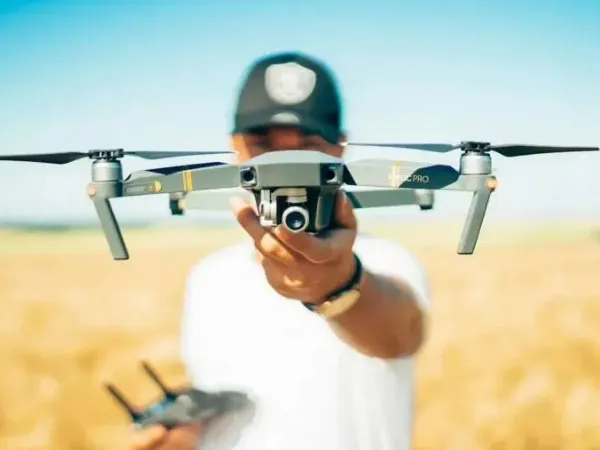
How to choose a drone for the Armed Forces of Ukraine?
First of all, pay attention to the technical specifications of the copter:
-
Flight range: The drone you choose should be able to maintain stable communication and perform tasks at distances of 10 to 20 km. For complex operations, such as reconnaissance or fire correction, this parameter is critical.
-
Aircraft equipped witha ground station for FPV drones can operate at even greater distances while ensuring high-quality signal transmission.
-
Speed: Combat FPV drones can reach speeds up to 120 km/h, whereas reconnaissance drones typically have a speed of 60–80 km/h to ensure high-quality video recording and data transmission.
-
Payload capacity: Models designed for transporting cargo or dropping munitions usually can carry 2 to 5 kg.
An FPV drone with these specifications is ideal for monitoring the enemy or detecting targets.
-
Autonomy time: For reconnaissance “birds,” this parameter is usually 30–60 minutes, while models oriented for rapid attacks may fly for 10–20 minutes. Flight duration is an important factor for reconnaissance and tactical missions.
-
Resistance to interference: Combat conditions involve electronic warfare. Your system should be protected against jamming and spoofing (false signals from enemy devices that replace genuine ones and cause UAVs to report inaccurate coordinates). For example, FPV drone stations from SkyCraft can maintain stable communication even in difficult conditions.
-
Weight and maneuverability: The light weight of quadcopters enhances maneuverability, which is especially important for military drones. At the same time, the drone’s body must provide high durability during collisions or impacts.
The next step is to choose a drone model for a specific mission:
|
Drone model
|
What tasks is it suitable for?
|
|
FPV drones
|
Attack missions
Artillery correction
Dropping munitions
Destroying enemy equipment and positions
|
|
Reconnaissance drones
|
Territory reconnaissance
Detection of enemy positions
Real-time situation monitoring
|
|
Quadcopters with cameras
|
Territory observation
Monitoring civilian areas
Assessing infrastructure damage
|
|
Kamikaze drones
|
Precision destruction of key targets at short and medium distances
High-precision attack missions
|
|
Logistics drones
|
Delivery of equipment, medicines, food, and supplies to combat zones
|
|
Drones with thermal imagers
|
Night reconnaissance
Search for people
Detection of equipment or camouflaged objects
|
|
Multicopters
|
Missions in complex terrains
Reconnaissance in confined spaces
Ensuring stable video communication
|
|
Tactical drones
|
Support for small units
Correction of tactical operations
Real-time video transmission
|
|
Electronic warfare (EW) drones
|
Signal jamming
Neutralization of enemy communications
Ensuring information superiority
|
|
Airspace control drones
|
Monitoring the situation in peaceful areas
Protection of specific zones
Detection of airborne threats
|