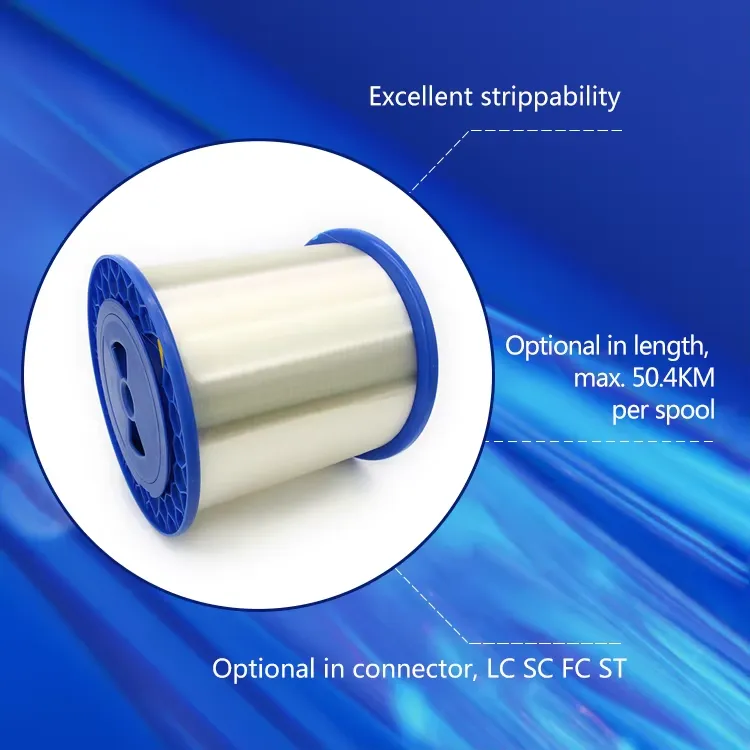
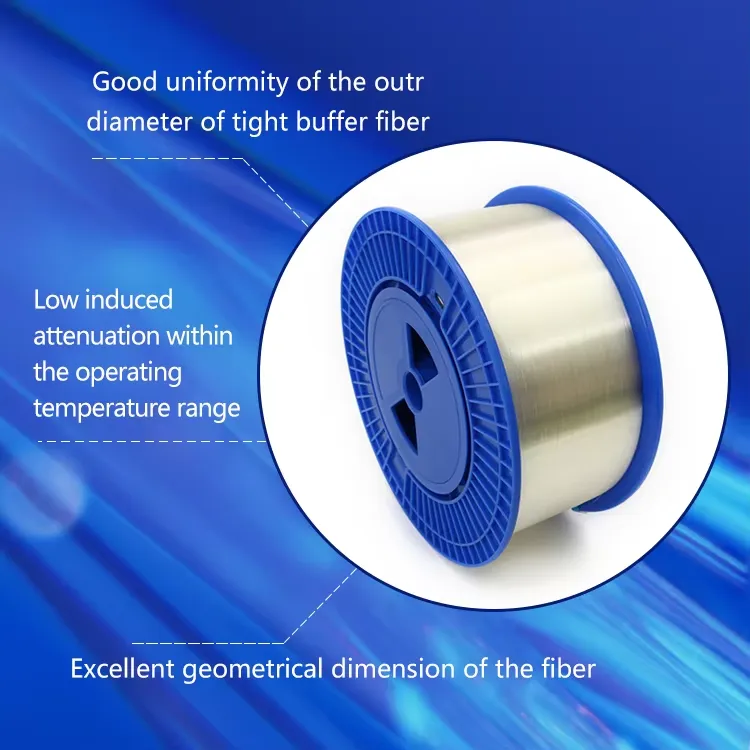
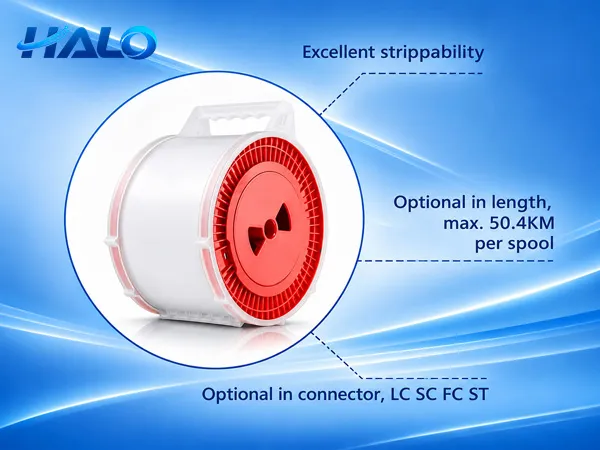
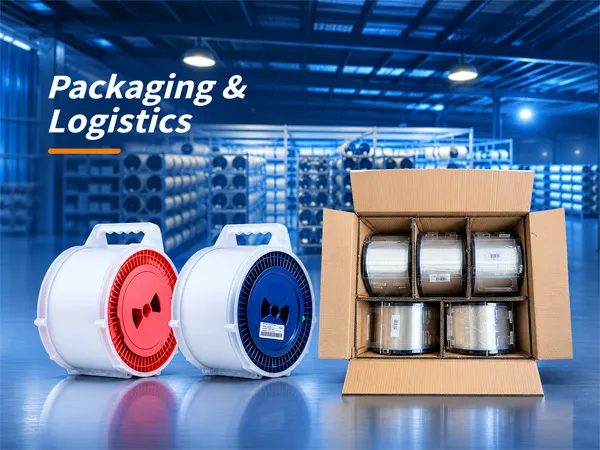
Quick Answer: Yes. G.657.A2 is fully compatible with G.652.D at the fiber, splice, and system level. ITU-T defines G.657.A2 as compliant with G.652.D, with the same mode field diameter range and cable cut-off wavelength. In practice, splicing g657a2 fiber to existing g652d fiber produces normal splice losses, typically 0.02–0.05 dB per splice, without special equipment changes.
Where They Differ: Bend Performance
The two fibers behave almost the same on straight routes. The real difference appears in tight-bend locations such as patch panels, dense racks, splice trays, building risers, and AI data center cabling.
Parameter
G.652.D G.657.A2
Minimum design bend radius
30 mm
7.5 mm
Macrobend loss, 10 mm radius, 1 turn @1550 nm
Substantial
≤ 0.1 dB
Macrobend loss, 7.5 mm radius, 1 turn @1550/1625 nm
Not specified at this radius
≤ 0.5 dB / ≤ 1.0 dB
Attenuation @1310 nm
≤ 0.34 dB/km
≤ 0.34 dB/km typical
Attenuation @1550 nm
≤ 0.20 dB/km
≤ 0.20–0.23 dB/km
So if your project already uses G.652.D and you need bend-insensitive fiber in tight sections, G.657.A2 can be introduced without compatibility risk.
Compatibility is stable. Supply is not. Demand from AI data centers has pushed global data center fiber demand to 74.7 million core-km in 2025, up 89% year over year, with 2026 demand projected to exceed 100 million core-km. A single hyperscale AI facility now uses 5–10 times more fiber than a traditional data center.
Prices have moved sharply. G.657.A2 bare fiber rose from roughly 32 RMB/core-km in early 2025 to 210–220 RMB/core-km by September 2026. G.652.D spot prices in China climbed from under 20 RMB/core-km to over 83 RMB/core-km by March 2026. Lead times have stretched from 8–12 weeks to 20+ weeks, and quotes often expire within 24 hours.
Because preform capacity takes 18–24 months to expand and accounts for about 70% of fiber production cost, the bottleneck is upstream. Many manufacturers are also shifting production toward G.657.A2 for higher margins, which further tightens g652d fiber availability. Buyers sourcing from a china manufacturer should treat G.657.A2 as the scarce, high-value grade and G.652.D as the volume grade under production pressure.
Factory-Level Procurement Checklist
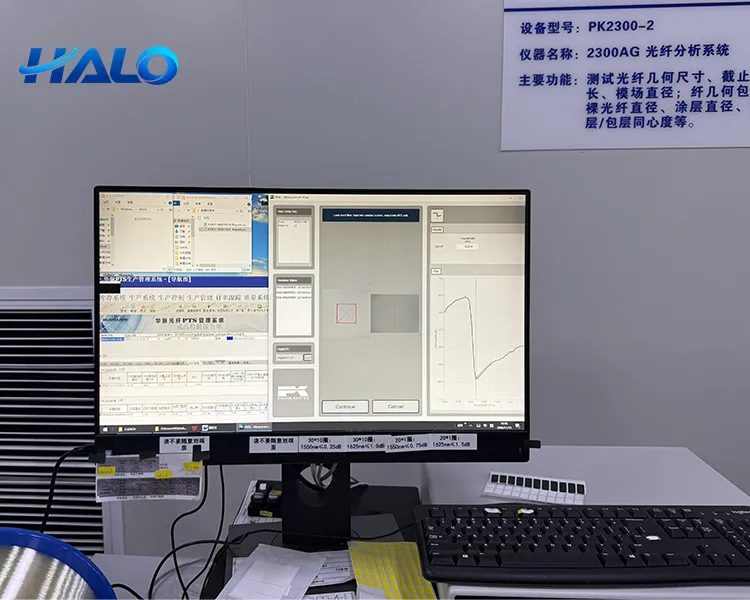
1. Buy from a drawer, not a re-spooler or trader. Ask for the drawing tower address and proof-test equipment model. A supplier that cannot answer within one business day may be sourcing from a third party.
2. Demand batch-specific macrobend and attenuation data. G.657.A1 and G.657.A2 look identical on a spool. For G.657.A2, require test data at 7.5 mm radius, 1 turn, ≤ 0.5 dB at 1550/1625 nm, plus attenuation at 1310 nm and 1550 nm for the exact batch.
3. Apply a price redline. When legitimate G.657.A2 production sits at 210–240 RMB/core-km, a quote at $20–25/km is likely G.657.A1 relabeled as A2, fiber that failed bend-loss screening, or material of unverified provenance.
4. Verify traceability and coating geometry. Each spool should carry a unique batch number linked to drawing and proof-test records. Check cladding diameter 125 ± 1 μm, coating diameter 245 ± 15 μm, and core-cladding concentricity error ≤ 0.5 μm. Request a video of the fiber paying off the spool at operational speed.
5. Lock G.657.A2 allocation first. If your project uses both grades, secure the g657a2 fiber allocation before building the g652d fiber volume around it. An integrated china manufacturer with preform-to-fiber capability will have more flexibility than a converter buying bare optical fiber on the open market.
Bottom Line
G.657.A2 is compatible with G.652.D — but compatibility does not make them commercially equivalent. In the current allocation market, verify who actually draws the bare optical fiber, demand batch-specific bend-loss and attenuation evidence, and do not let a below-floor quote override supply-risk math.