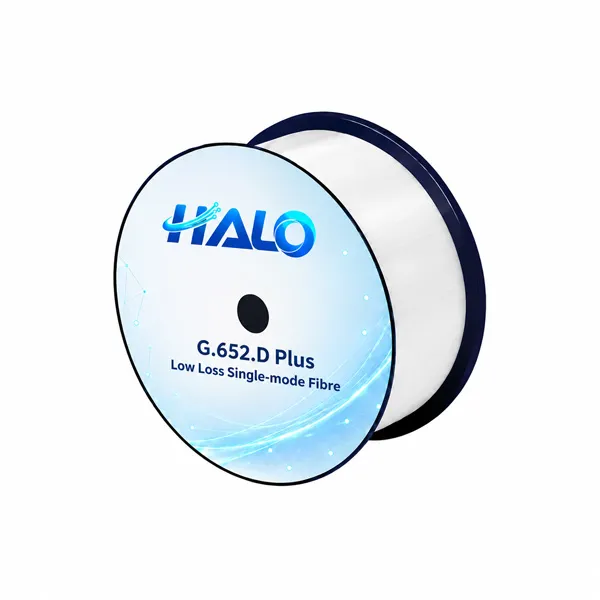

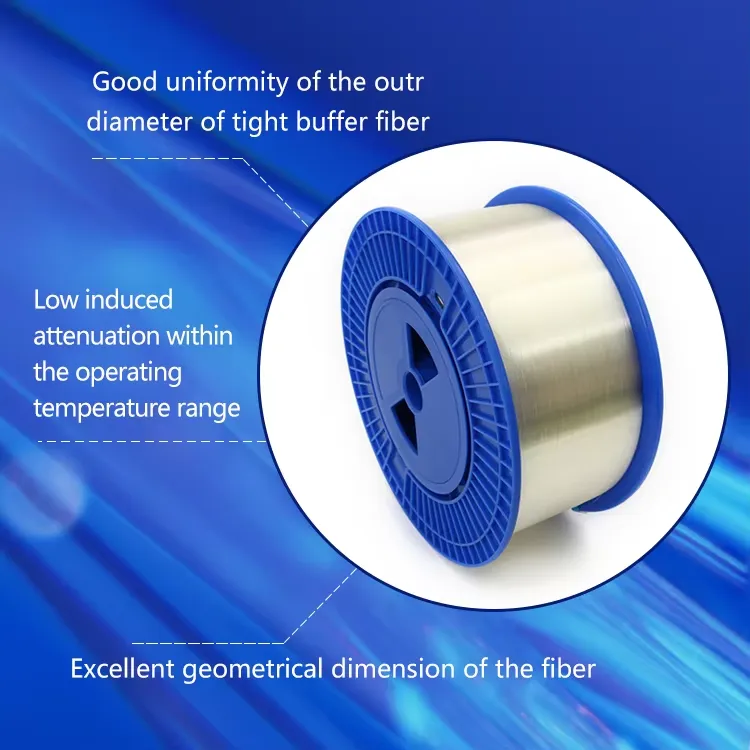
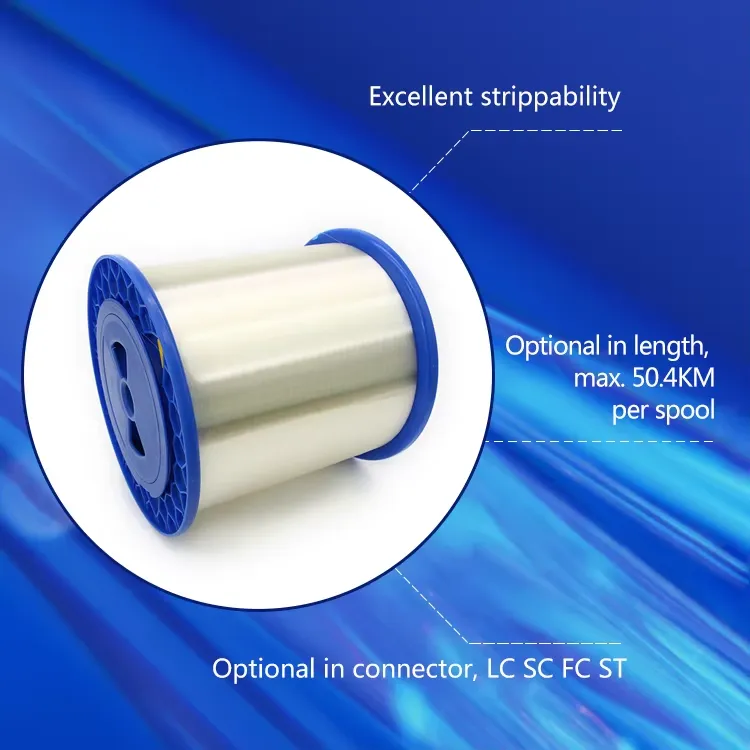
G.652.D is well suited to transmission-focused networks where the route is relatively open, bend control is easy, and standard single-mode performance is the priority.
Access networks
It is also appropriate for access-network deployment where network compatibility, stable communication performance, and cost-effective rollout are more important than tighter bend-radius capability.
Outdoor and duct cable structures
For standard outdoor cable, duct-installed cable, and conventional communication cable structures, G.652.D remains a practical solution where the installation path is controlled and spacious enough.
General-purpose single-mode cable projects
It is suitable for general telecom and cable projects where the design goal is stable, mainstream single-mode performance rather than compact bend optimization.
| Project Condition | Recommended Fiber | Why |
|---|---|---|
| Spacious routing, normal transmission path, cost-sensitive project | G.652.D | Best fit for mainstream single-mode deployment when bend pressure is low |
| Some bend concern, indoor access routing, moderate compact installation | G.657.A1 | Balanced option when some extra bend margin is needed |
| Dense routing, tighter loops, compact boxes, more demanding bend conditions | G.657.A2 | Better bend tolerance for more aggressive installation geometry |
• Designed for operation over the full optical spectrum from 1260-1625 nm, which provides 50% more usable wavelengths and hence the transmission capacity is increased
• Outstanding optical performance supporting high-speed transmission technologies such as DWDM and CWDM
• Being compatible with existing 1310 nm equipment
• Good protection and excellent strip force stability
• Accurate geometrical parameters that insure low splicing loss and high splicing efficiency
|
Characteristics |
Conditions |
Specified values |
Units |
|
|---|---|---|---|---|
|
Optical Characteristics |
||||
|
Attenuation |
1310nm |
≤0.34 |
[dB/km] |
|
|
1383nm(after H2-aging) |
≤0.34 |
[dB/km] |
||
|
1550nm |
≤0.20 |
[dB/km] |
||
|
1625nm |
≤0.24 |
[dB/km] |
||
|
Attenuation vs. Wavelength Max. α difference |
1285-1330nm, in reference to 1310nm |
≤0.03 |
[dB/km] |
|
|
1525-1575nm, in reference to 1550nm |
≤0.02 |
[dB/km] |
||
|
Dispersion Coefficient |
1285-1340nm |
-3.5 to 3.5 |
[ps/(nm·km)] |
|
|
1550nm |
≤18 |
[ps/(nm·km)] |
||
|
1625nm |
≤22 |
[ps/(nm·km)] |
||
|
Zero Dispersion Wavelength(λ0) |
-- |
1300-1324 |
[nm] |
|
|
Zero Dispersion Slope(S0) |
-- |
≤0.092 |
[ps/(nm2·km)] |
|
|
Typical Value |
-- |
0.086 |
[ps/(nm2·km] |
|
|
PMD |
Maximum Individual Fibre |
-- |
≤0.1 |
[ps/√km] |
| Link Design Value(M=20,Q=0.01%) |
-- |
≤0.06 |
[ps/√km] |
|
| Typical Value |
-- |
0.04 |
[ps/√km] |
|
|
Cable Cutoff Wavelength (λCC) |
-- |
≤1260 |
[nm] |
|
|
Mode Field Diameter(MFD) |
1310nm |
8.7-9.5 |
[μm] |
|
|
1550nm |
9.8-10.8 |
[μm] |
||
|
Effective Group Index of Refraction(Neff) |
1310nm |
1.466 |
-- |
|
|
1550nm |
1.467 |
-- |
||
|
Point Discontinuities |
1310nm |
≤0.05 |
[dB] |
|
|
1550nm |
≤0.05 |
[dB] |
||
|
Geometrical Characteristics |
||||
|
Cladding Diameter |
-- |
125.0±0.7 |
[μm] |
|
|
Cladding Non-Circularity |
-- |
≤1.0 |
[%] |
|
|
Coating Diameter |
-- |
235-250 |
[μm] |
|
|
Coating-Cladding Concentricity Error |
-- |
≤12.0 |
[μm] |
|
|
Coating Non-Circularity |
-- |
≤6.0 |
[%] |
|
|
Core-Cladding Concentricity Error |
-- |
≤0.6 |
[μm] |
|
|
Curl(radius) |
-- |
≥4 |
[m] |
|
|
Delivery Length |
-- |
Up to 50.4 |
[km/reel] |
|
|
Environmental Characteristics |
1310nm, 1550nm & 1625nm |
|||
|
Temperature Dependence Induced Attenuation |
-60℃ to +85℃ |
≤0.05 |
[dB/km] |
|
|
Temperature-Humidity Cycling Induced Attenuation |
-10°C to +85°C, 98% RH |
≤0.05 |
[dB/km] |
|
|
Water Immersion Dependence Induced Attenuation |
23°C,for 30 days |
≤0.05 |
[dB/km] |
|
|
Damp Heat Dependence Induced Attenuation |
85°C and 85% RH,for 30 days |
≤0.05 |
[dB/km] |
|
|
Dry Heat Aging |
85℃, for 30 days |
≤0.05 |
[dB/km] |
|
|
Mechanical Specifications |
||||
|
Proof Test |
-- |
≥9.0 |
[N] |
|
|
-- |
≥1.0 |
[%] |
||
|
-- |
≥100 |
[kpsi] |
||
|
Macro-bend Induced Attenuation |
100 Turns Around a Mandrel of 30 mm Radius |
1625nm |
≤0.05 |
[dB] |
| 100 Turns Around a Mandrel of 25 mm Radius |
1310nm and 1550nm |
≤0.05 |
[dB] |
|
| 1 Turn Around a Mandrel of 16 mm Radius |
1550nm |
≤0.05 |
[dB] |
|
|
Coating Strip Force |
typical average force |
1.5 |
[N] |
|
|
peak force |
1.3-8.9 |
[N] |
||
| Dynamic Fatigue Parameter(nd) |
-- |
≥20 |
-- |
|
The G.652.D Low-Water-Peak Single-Mode Optical Fiber technical sheet shows a standard delivery length of 50.4 km per spool. The packing comparison information also shows a 60.4 km packing option, but the safer product-page wording is to treat 50.4 km as the standard default and state that other spool lengths are subject to order confirmation.
| Item | Data |
|---|---|
| Length per spool | 50.4 km |
| With plastic reel | 4.08 kg |
| With plastic shell | 4.38 kg |
| Single spool box size | 190 × 290 × 275 mm |
| Carton quantity | 5 reels / box |
| Shipping carton size | 515 × 600 × 315 mm |
| Carton weight | 25 kg / box |
| Boxes per pallet | 28 boxes |
| Spools per pallet | 140 spools |
| Total length per pallet | 7056 km |
| Pallet size | 1.03 × 1.23 × 2.35 m |
| Pallet weight | 725 kg |
| 40HQ loading | 20 pallets |
| Total spools per 40HQ | 2800 spools |
| Total length per 40HQ | 141120 km |
 Email for a Quote
 Whatsapp